A Study Routine That Starts With One Question
Build a study routine around one question you can attempt and check. Copy a 30-minute example, keep corrections visible, and leave a clear next study step.

The book is open and the notes are in order. You have chosen a timer and moved a few things on the desk. But “study this chapter” still leaves you with a choice: read which part, answer what, and how will you know whether the work made sense?
A useful study routine starts with one question and a way to check an attempt. Setup gets those things ready. Then it ends, so the subject work can begin.
This guide is for students who need a clear entry into a session, including adults studying around paid work or care duties. You can use paper alone. The sample times are adjustable planning choices, not a best study interval or a promise about marks.
What makes a study routine useful?
A study routine separates preparation, practice, and checking. Choose a small question, gather the relevant material, make an attempt, and compare it with a sound source or course requirement. Record the gap and next action; a completed timer shows time spent, not what you understood.
If the main problem is starting any task at all, the task initiation guide can help you define the first action. Here, that action must lead into the subject, not another round of arranging notes.
- Choose a questionUse the course task, feedback, or one taught idea.
- Prepare the materialKeep a prompt, attempt space, and check source.
- Make an attemptWrite, solve, explain, or read with a purpose.
- Check and correctKeep the original answer and mark the gap.
- Leave a next stepName the question or line to return to.
Preparation is finished when the first learning action is possible.
1. Find the time you actually have
Start with the next fixed event: class, a work shift, a journey, or a care task. Leave room to save, pack up, and get where you need to be. The time until class starts is not all study time if the class is across campus.
Write a stop time before selecting the task. A short available period calls for a smaller task, not a full chapter under a tighter clock.
For example, a commuter might have time to answer one lecture question and check the notes. A longer assignment needing several missing sources may be a poor fit for that same gap.
If food, rest, or another essential need comes first, attend to it. A low-energy routine may help you remove demands; it is also fine not to run a study routine today.
Keep any course support arrangements or accommodations. A general checklist is not a reason to change them.
2. Choose a question, not just a topic
Use the syllabus, assignment instructions, recent feedback, or a taught example to narrow the task. Ask what you need to explain, solve, compare, or make.
The UNC Learning Center's study guidance recommends forming questions, organizing by topic, and working problems with explanations. These are useful actions to choose from, not evidence that one timer setting fits every subject.
| Topic label | Question or first action | What to inspect |
|---|---|---|
| Statistics | What is the difference between a population and a sample? Give an example. | Definitions and an example that fit. |
| History | What claim does the assigned author make, and what evidence supports it? | A claim linked to the reading. |
| Accounting | Work one assigned reconciliation problem and explain each step. | The calculation and the reason for the method. |
| Programming | Write the small function described in the practice task. | Its output, edge cases, and the reason it works. |
Scroll sideways to see all columns.
For wholly new content, begin with a small assigned reading and a question to guide it. You do not have to recall information you have not yet learned. For familiar content, an attempt without the answer in view can show what you can produce independently.
3. Gather a small, complete set of material
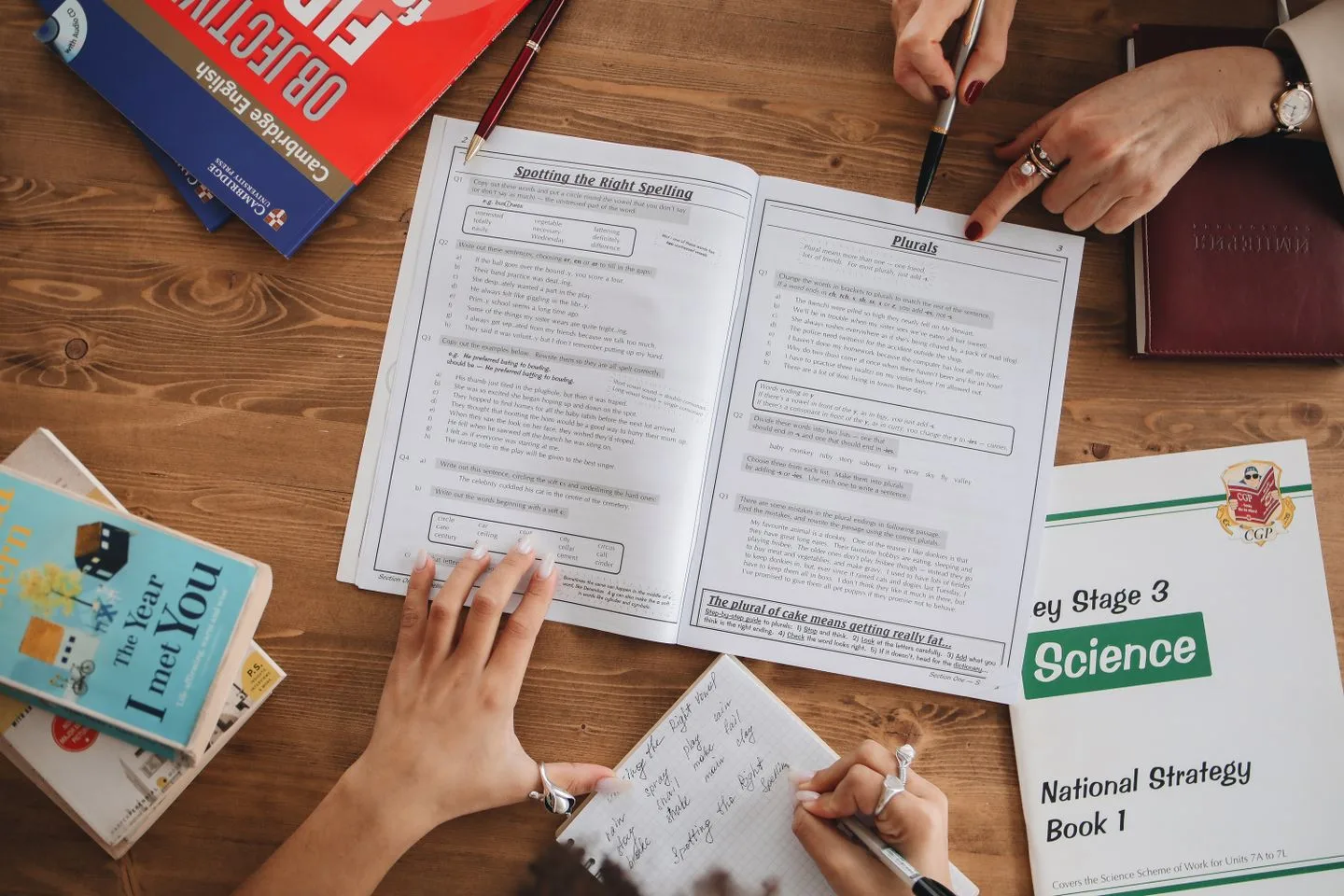
You need the prompt, a place for your attempt, the relevant course source, and a way to check the work. You do not need every file from the whole module.
For a problem, the set might be the exercise, permitted formula sheet, blank paper, and an approved worked solution to inspect afterward. For a reading, it may be the assigned passage, your question, and a short response space.
Choose the check source before starting:
- An approved solution or answer key.
- A course definition or worked example.
- A marking guide or stated learning objective.
- Feedback from a tutor or instructor.
Not every subject has one right sentence. For an argument or design task, check the evidence and criteria, not whether your wording matches a model answer.
If no sound check source is available, mark the attempt “needs checking.” A neat answer or confident feeling does not resolve that gap. Record the exact question for someone who can help.
4. Make an attempt you can inspect
Decide what the attempt will look like: a written answer, a spoken explanation, a diagram, a calculation, or working code. For previously studied material, put the answer source aside if you want to check unaided recall.
Retrieval practice means trying to bring learned information to mind. In this routine, that might mean explaining a definition without notes before checking it. Do not call copied text independent recall.
For new material, read the selected section first. Then try a short explanation and return to the source. If you do not know where to begin, inspect an example or ask for instruction rather than keeping a blank page under a countdown.
Follow assessment rules about outside help and permitted material. For practical work, keep required supervision and safety steps; a study timer must not hurry a laboratory or tool task.
5. Check, correct, and name the remaining gap
Keep the original attempt visible. Add the correction beside it or underneath it, so you can tell what you knew before looking and what came from the source.
The UNC Study Cycle includes checking understanding through self-testing, discussion, and learning objectives. The practical choice here is to inspect the work itself, not only record that the session happened.
A complete teaching example might look like this:
Question: What is a population, and what is a sample?
Attempt without notes: “The population is everyone who answers the survey.”
Check: The population is the whole group the question concerns; the sample is the subset observed.
Correction with notes: “If the question concerns all current library members, they form the population. Members who answer the survey form the observed sample.”
Next check: Try a different example without notes.
The survey is an invented teaching example, not research data. The correction does not prove later recall. It identifies the present gap: confusing the group of interest with the people observed.
If the reasoning still does not make sense, write a precise help question. “Why does line 2 follow from line 1?” is easier to answer than “I don't understand this chapter.”
Copy this study-start card
Keep the card with the material. It should point into the session, not become a second study project.
Stop learning work at: ______
Topic and course source: ______
First question or problem: ______
Attempt format: ______
Check source: ______
If I cannot begin: ______
Before leaving: Save the attempt and name the next action.
For an unfamiliar topic, the first action can be “read the assigned example to find why this method is used.” For a familiar topic, it can be “solve the first problem without looking at the worked answer.”
A thirty-minute study routine example
This editable example is for revisiting a topic already taught. It shows one way to give setup an end while keeping time to check and close. It is not a tested optimum or an example of a real student's results.
| Minutes | Action | Useful result |
|---|---|---|
| 0–2 | Confirm the stop time and select one question. | The task fits the available period. |
| 2–5 | Gather the prompt, attempt space, and check source. | Preparation is complete. |
| 5–21 | Attempt, check, and practise a related question. | Answers and corrections exist. |
| 21–27 | Try a final question or inspect the remaining gap. | The next study need is clearer. |
| 27–30 | Save the work and leave the next prompt. | The session has a clear end. |
Scroll sideways to see all columns.
The total is 5 minutes of setup + 16 minutes of practice + 6 minutes of final checking + 3 minutes of closure = 30 minutes. Checking can also happen during practice; you do not need to wait until minute 21 for feedback.
If setup needs longer, reduce the planned task or choose another workable session length. Do not keep adding preparation until no time remains for the subject. For other task allowances, see how to estimate task time.
Leave a useful place to return
Before stopping, save one line:
“Attempt saved. The definition is corrected with notes; next try a different example without them.”
If care duties or another interruption ends the session early, record the actual state. An unfinished answer can still have a clear next step. You do not have to repeat the whole setup when you return.
Keep a later check in your course plan when feasible. Choose its timing around the subject and real schedule, not a universal review interval. If study has stopped for several days, use the routine restart guide to separate returning from catching up on every missed session.
When a routine timer fits
Skye guides preparation steps you enter manually with your own durations. Each task has a timer you can pause, skip, or adjust. See routine setup and timer help for the controls. Labels such as “choose one question” and “gather the check source” can keep the sequence clear.
Keep questions, answers, corrections, and course feedback in the study material. They are separate from routine completion.
Frequently asked questions
How do I stop study preparation from using the whole session?
Choose one question and its check source before arranging more material. Preparation ends when the first subject action is possible, not when every note is tidy. If you still cannot name that action, use the task initiation guide to make it specific.
Can Skye time practice as well as study setup?
Yes. Enter the steps you want timed, such as gathering a prompt, attempting a question, checking it, and saving the next action. Set your own durations and use the timer controls to pause or adjust them. Keep answers and corrections in your study material; a completed timer does not show understanding.
What should I record when I get a question wrong?
Keep the original attempt and add the correction from a sound course source. Write the exact point you still need explained rather than marking the whole topic failed. If you must stop, leave a return note that names the next question or line to check.
Start inside the subject
Choose one question before your next session. Put its material and check source within reach, then make an attempt. A small piece of work you can examine is a clearer place to begin than another plan to “study more.”
Skye facts checked against app source October 20, 2026. The app was not tested for this update; external source checks were not repeated.
A little space for ideas that fit into real life.
More from the blog