Cleaning Routine Checklist: Small Tasks, Clear Next Steps
Use a cleaning routine checklist with small timed tasks, planned rest, and a clear stop point. Copy the template, use any timer, or enter your steps in Skye.

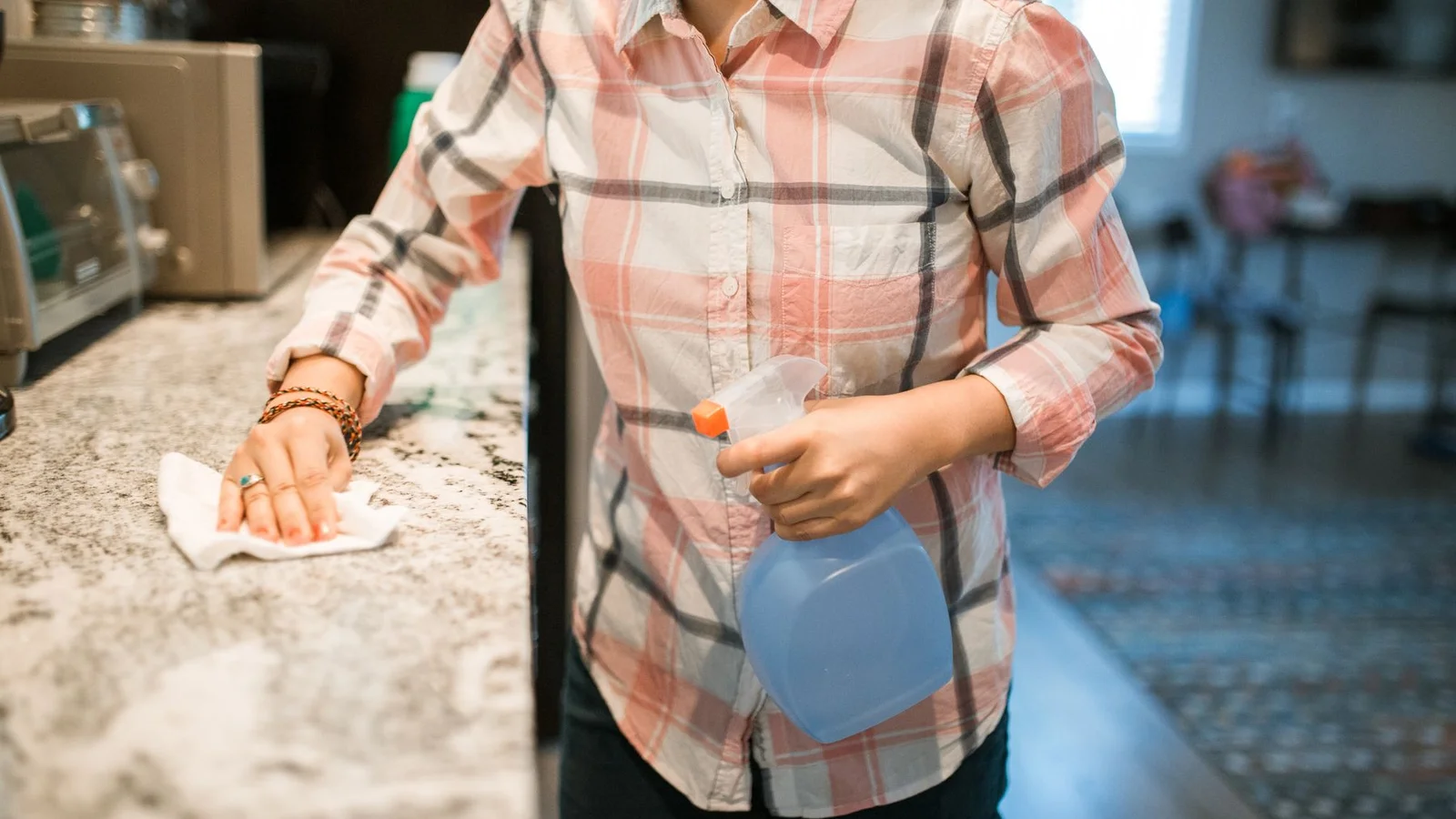
Photo: RDNE Stock project / Pexels.
A cleaning routine checklist should tell you what to do next, not turn one dirty counter into a whole-house job. “Clean the kitchen” leaves the size of the task open. “Clear and clean the counter beside the sink” gives you a place to start and a place to stop.
Choose the result you need today: space to prepare food, a table ready for a meal, or a small patch of floor without crumbs. Leave the rest of the room off this list. Include rest and putting supplies away before you add optional work.
Copy the checklist below, use the kitchen example to choose task times, and adapt the steps to your home. Paper is enough; add a basic timer if it helps. You do not need an app to use the method.
What is a cleaning routine checklist?
Quick answer: A cleaning routine checklist is an ordered list of small household tasks with a clear end point. Choose one area, name each action, and add adjustable times, rest, and safe close-down. Use paper with a basic timer, or enter the steps manually in a routine app.
Choose the stop point before the timer
Before you set a timer, decide what counts as finished. A kitchen list can include dishes, cupboards, the fridge, the floor, and a pile of post. For one short session, choose a surface or floor section and leave the other jobs for later.
Ask four questions:
- What needs attention first? An ordinary spill or blocked walking route may matter more than a shelf.
- What would make the area usable? Name a place to prepare food, eat, or sit.
- What can wait? Put cupboard sorting or decorative work on another list.
- What marks the end? Include putting products away, not just finishing the visible surface.
Keep food cleanup separate from optional household planning. The FDA's safe food handling guidance says to wash cutting boards, dishes, utensils, and counters after preparing each food item. Do not wait for a later timed session to do that work.
For other household surfaces, the CDC advises regular cleaning of high-touch surfaces and cleaning other surfaces when dirty or needed. Your list can change with use, visible dirt, surface care instructions, and household needs. It does not need to follow one fixed calendar for every room.
If you are choosing a tool rather than a task list, the routine timer and habit tracker comparison explains when timing is useful and when a list is enough.
Copy this cleaning routine checklist
Use the checklist for one small area. Leave out actions that do not apply. Write the location beside each task: “collect rubbish from the table,” for example, rather than “collect rubbish.” That boundary tells you which items to leave for later.
Before starting, name four things on your paper or list:
- Area: Where will you work?
- Useful end point: What will be different when you stop?
- Rest point: When will you pause and decide whether to continue?
- Close-down: What must be made safe before you finish?
Product directions come first. Read the label and surface care instructions. Do not mix cleaning products or chemicals. A task timer must not shorten required contact time, rinsing, drying, or safe storage.
Before cleaning
- Choose the small area and the result you want.
- Check for work outside an ordinary clean, such as an unknown spill or damaged surface.
- Read the product label and surface care instructions.
- Get the needed cloths, bag, brush, and suitable product.
- Arrange ventilation and protective items as the label directs.
- Keep children and pets away from cleaning products and the work area as needed.
The Northern New England Poison Center's product guidance explains that directions cover amounts, dilution, ventilation, and protective equipment. Those directions decide the method, not the length of your session.
Clear, clean, and rest
- Collect ordinary rubbish from the chosen area.
- Put items back without starting a sorting project.
- Move dishes to the washing area, or load suitable items into the dishwasher.
- Take the planned rest with products closed and safely stored.
- Clean the chosen surface using a suitable method.
- Complete any required contact-time, rinse, and drying steps.
- Remove visible crumbs or dirt from the selected floor area if needed.
Moving dishes makes a counter accessible; it does not clean it. Check off “move dishes” when that action is done. Leave “clean the counter” unchecked until you have completed its cleaning steps.
Close down
- Leave a safe, dry walking route.
- Close and store products as directed, away from children and pets.
- Deal with used cloths and equipment according to their care instructions.
- Wash your hands.
- Note what is done and one next task for another session.
- Stop rather than add another room.
Build a timed cleaning routine in six steps
To turn the checklist into a timed routine, give each task an action, a location, and a stopping rule. Write what you will do, where you will do it, and what counts as finished. Then choose the times.
1. Name one useful finished state
Write “clear the left side of the dining table,” not “sort the living space.” If the purpose is dinner, choose enough space for the meal. Filing every paper is a different task.
Put paper sorting on a later list. Keep that list beside the checklist so you can note a job without starting it.
2. Split the work into actions
List rubbish, items to return, dishes, surface cleaning, and floor work as separate steps where needed. If you have less time, you can remove the optional floor work without losing the order of the remaining tasks.
Keep a small later list for discoveries that do not belong in this session:
- A drawer to sort.
- A missing storage box.
- A surface that needs different care instructions.
- An object whose owner needs to choose a place for it.
3. Choose times that fit the task size
Give each task a time allowance you can change. Base it on the work in front of you: clearing a small counter and washing a full sink need different allowances.
If you do not know how long a task takes, time one attempt manually. Note the area covered and any interruption. Use that note to change the allowance or reduce the area next time, not to make yourself work faster.
4. Name rest and close-down as steps
Add rest before you start, rather than waiting to see whether there is time left. You do not have to finish the work to take it.
A short sequence could be:
Collect rubbish → move dishes → rest → clean one counter → put supplies away.
The rest point is a chance to continue, rest longer, or stop. Reserve time for closing products and leaving the area safe even when you omit optional cleaning.
5. Run one timer at a time
Start the timer for the current action and leave the later tasks on the list. When it ends, check whether the task is done, needs more time, or can safely wait. Mark where you stopped before moving on.
Pause the sequence if product instructions need longer. A countdown is a work allowance, not permission to leave a chemical step incomplete.
6. Change one part after the session
Write a short note such as “dishes needed more time” or “floor not needed today.” Change that part of the next session rather than rebuilding the whole routine.
You might make the area smaller, allow more time, move rest earlier, or ask someone else to take a named task. Keep the steps that already fit.
A cleaning routine timer example with planned rest
Use this example when you need one kitchen counter ready to use. It covers ordinary rubbish, moving dishes, cleaning that counter, and nearby crumbs, not a whole-kitchen clean.
The suggested allowances total 21 minutes: 18 minutes for tasks, setup, and close-down, plus 3 minutes of rest. All times are editable examples, not tested best durations. Rest longer or do less when needed.
| Step | Example allowance | Work and stopping point |
|---|---|---|
| Prepare | 2 minutes | Read instructions and get supplies. Stop when you know the method and have what you need. |
| Collect rubbish | 3 minutes | Collect ordinary rubbish from the chosen area. Leave other areas for later. |
| Move or load dishes | 4 minutes | Make the chosen counter accessible. Washing dishes may still remain. |
| Rest | 3 minutes | Close and safely store products. Decide whether to continue, rest longer, or stop. |
| Clean one counter | 4 minutes | Use the suitable method. Complete all label steps, even if they need longer. |
| Remove nearby crumbs | 2 minutes | Sweep the small floor area if needed. Stop at its chosen boundary. |
| Store supplies and wash hands | 2 minutes | Secure products, deal with used items, and leave a safe route. |
| Note the next task | 1 minute | Write one task for another session, then finish. |
Scroll sideways to see all columns.
Setup, required product waiting, drying, and interruptions can extend the elapsed time. A dishwasher cycle is also separate from the minutes spent loading it.
The four-minute dish step makes the counter accessible; it does not include washing a full sink. If washing dishes is the main need, give it a separate allowance and remove other work.
If time is short, reduce the counter area or omit the optional sweep. Keep safe storage and close-down.
Product labels come before the countdown
Choose the cleaning method before its timer. Check the product amount, suitable surfaces, and required steps on the label; a countdown cannot decide these for you.
The EPA distinguishes cleaning from sanitizing and disinfecting. Cleaning removes dirt and organic matter with soap or detergent. Sanitizing and disinfecting have different purposes and product directions.
If a disinfectant is needed, follow its full contact time: the time the surface must remain wet with the product. Do not wipe it away early because the task timer ended.
The CDC's home guidance says to clean before sanitizing or disinfecting, and not to mix products or chemicals. Its advice also includes appropriate protective equipment, ventilation, and storage away from children and pets.
Before using a product, check:
- Is it suitable for the surface and purpose?
- Does it need dilution, and what does the label require?
- What ventilation and protective items are needed?
- Must the surface remain wet for a stated time?
- What rinsing, drying, storage, or disposal steps are required?
Follow ventilation directions with your surroundings in mind. EPA indoor air guidance describes outdoor air and fans that exhaust outdoors as ways to reduce indoor pollutants. It also advises checking nearby outdoor pollution sources. An open window is not the right answer in every condition.
Keep products in their original labeled containers. Poison Control warns against putting cleaners in drink bottles, cups, or food containers. Do not make an unlabeled small bottle to lighten your cleaning kit.
This checklist covers ordinary household cleaning. Unknown spills, mold, bodily fluids, and cleaning during illness need relevant guidance rather than a faster version of the example.
For raw meat or poultry contamination, follow the CDC's specific advice to clean, then sanitize the affected food-contact surfaces. The ordinary counter-cleaning step is not a substitute.
Make the list smaller when energy is limited
Reduce the work before shortening every timer. Choose one section of a counter and finish that section, rather than trying to fit the whole kitchen into less time.
The Leeds Teaching Hospitals NHS guide to daily activities recommends realistic priorities, smaller steps, rest, and spreading heavy household work. It is patient guidance from a respiratory occupational therapy service, not evidence for one ideal cleaning interval.
You can change the plan in several ways:
- Area: One counter section instead of the kitchen.
- Task count: Rubbish and one needed surface instead of a room list.
- Movement: Stay in one area rather than carry items between rooms.
- Rest: Rest before starting, earlier in the list, or for longer.
- Help: Ask someone to carry supplies or take a named action.
- End point: Put supplies away after the chosen essential task.
Rest, help, or no cleaning session may be the right choice today. Follow any personal care advice you have instead of treating an example timetable as a rule for your body.
Do not move every skipped task to tomorrow's short list. Keep work that can wait on a separate list. At the next session, choose what matters then, rather than starting with everything left over.
Three ways to adapt the checklist to your home
One table in a small studio
If your table holds meals, work, and storage, choose “make room for dinner” rather than “tidy the studio.” Return work items, move dishes, rest if needed, and clean the eating section using its care instructions.
Leave paper sorting for later. Keep items waiting for a decision out of the way without blocking a walking route. Once the eating section is ready and the supplies are stored, stop; the rest of the table can wait.
A parent or carer who may need to stop
Choose tasks that can reach a safe stopping point before another duty begins. Do not start product work when you cannot follow the full directions or keep the area safe.
Keep a short interruption note:
- Current task: What are you doing?
- Before leaving: What must be made safe?
- On return: What is the next action?
If care duties resume after collecting rubbish, close down rather than begin a surface-cleaning step. Note “rubbish collected; dishes next” so you can see where to restart without repeating finished work.
Adults sharing a kitchen
Agree on named tasks and a clear handover. “Someone clean the kitchen” leaves both the person and the end point unclear.
One person might move dishes from the chosen counter. They can then tell the next person, “The counter is clear; the dishes still need washing.” Another person can clean that counter. Agree separately who will sweep the floor and when.
Tell others about wet areas. The UK Health and Safety Executive's workplace cleaning guidance advises leaving floors dry or keeping people away until they dry, and cleaning in sections to leave a dry path. Use the same caution at home rather than treating the timer as proof that the floor is ready to walk on.
Paper, a basic timer, or a cleaning routine app?
Choose a tool for the part you need help with: seeing the next action or following task times.
- Paper: Use a visible list when you mainly need the next action. Mark your place before stopping.
- Paper and a timer: Add a work allowance for each task. You reset the timer and move through the list yourself.
- A guided routine app: Keep your entered sequence and task timers together. You still choose the method, start the routine, and change the plan when needed.
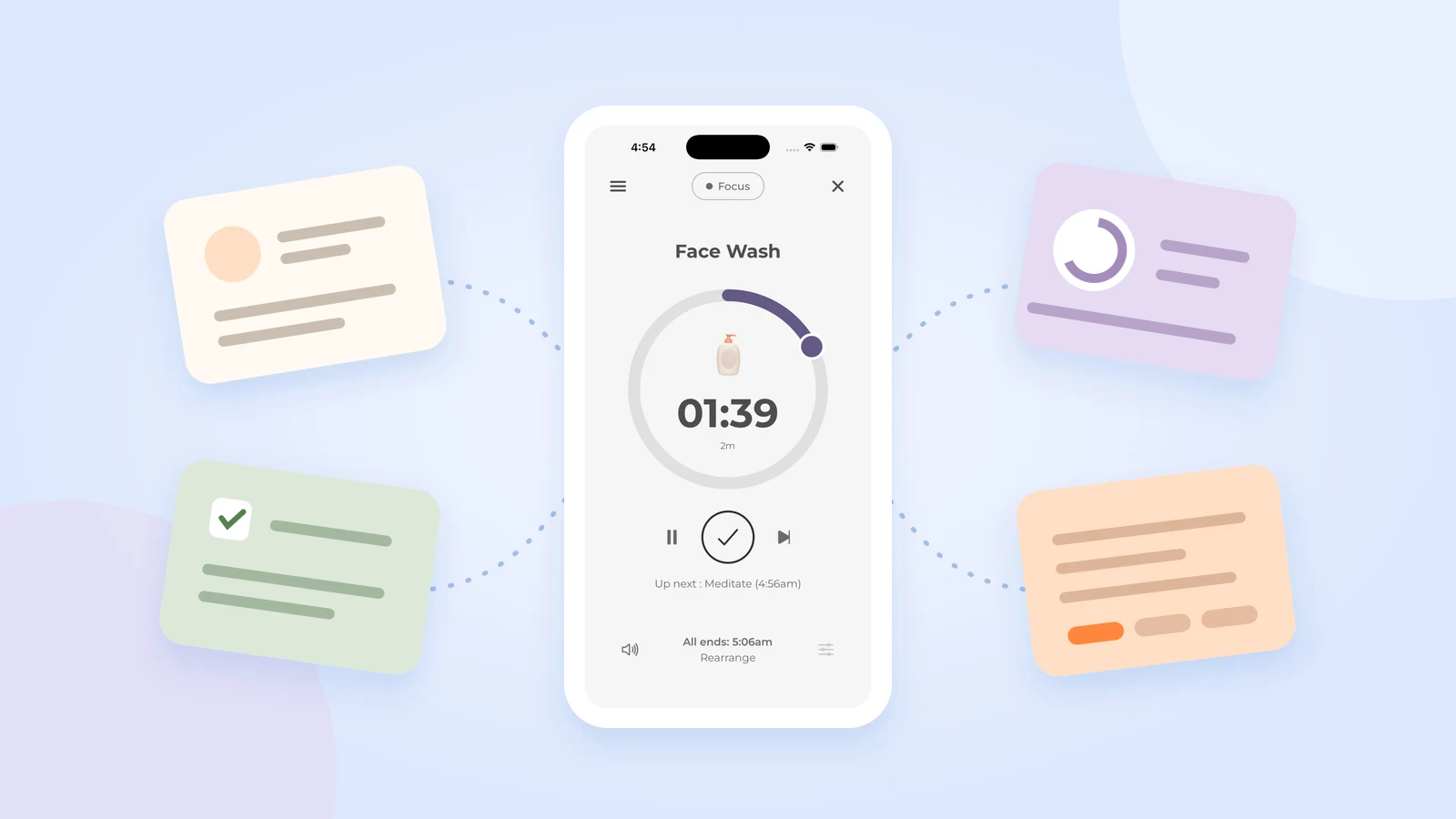
Skye keeps your entered cleaning steps in order, with a timer for each task. Pause, skip, or change the time when needed. See routine and timer help for the controls and the feature overview for the basic approach.
To use Skye for this list, create a named routine, then enter your tasks with durations. Choose a start time if you want a scheduled routine. Name the place and boundary in each task so you can see the next action without reopening this guide:
- “Collect rubbish from kitchen counter.”
- “Move dishes from left counter.”
- “Rest and check whether to continue.”
- “Clean left counter as label directs.”
- “Store supplies and wash hands.”
Enter these tasks manually; they are not a built-in cleaning template or automatic import. Keep product instructions separate and available while cleaning. A skipped app step does not mean that a surface was cleaned.
If you want to compare guided apps before choosing, see the Routinery alternatives guide.
Common mistakes and small corrections
- Naming a room instead of an action: Write the surface, action, and end point.
- Filling every minute with work: Add rest and close-down before optional tasks.
- Racing the countdown: Reduce the area or increase the allowance.
- Starting to sort possessions: Put the sorting job on the later list.
- Counting dishes moved as dishes washed: Keep those actions separate.
- Ignoring label time: Pause the sequence and complete the directions.
- Building the plan for your best day: Keep a smaller version that can stand on its own.
Finish at the chosen result and a safe stopping point, not at the largest possible task count. If work regularly takes longer than planned, change the allowance or the task size. The timer is there to guide the work, not grade it.
Frequently asked questions
Which cleaning tasks should I keep when I have little energy?
Choose one useful area, such as enough counter space to prepare food, and remove optional sorting or floor work. Keep rest, product storage, and safe close-down. The low-energy routine guide explains how to remove work rather than rush the same list.
What if a cleaning product needs longer than the task timer?
Follow the full label instructions, including contact time, rinsing, and drying. Pause or extend the task timer instead of shortening the product's required steps. A timer ending does not show that a surface is clean or safe to use.
Can I keep separate cleaning routines for different areas in Skye?
Yes. Skye is free with all features and unlimited routines, so you can keep separate sequences for the kitchen, bathroom, or one small area. Enter your own tasks and durations; this checklist is not an automatic import. See routine setup help and keep product instructions available separately.
Start with one useful area
Start with the area you need next, not a plan for the whole home. Copy the checklist, name the surface, and choose the actions that apply. Include rest and putting supplies away. That paper list can be your complete method.
If separate task timers would help, try your cleaning checklist in Skye. Enter the steps you chose manually, with time for rest and safe close-down. You can start with one counter and leave it there.
Sources and method
External sources checked October 19, 2026. Skye facts checked against app source and confirmed free-access details October 20, 2026. The app was not tested for this update. The checklist and task times are editable planning examples, not tested cleaning intervals or app results. Product labels, surface care instructions, and any personal care guidance take priority over the example.
- FDA safe food handling and CDC home cleaning guidance: food cleanup, ordinary cleaning, sanitizing, disinfection, and no mixing.
- EPA cleaning and contact-time guidance and indoor air guidance: product distinctions, wet contact time, and ventilation.
- Northern New England Poison Center and Poison Control container guidance: label checks and safe containers.
- Leeds Teaching Hospitals NHS patient guide: smaller tasks, priorities, rest, and spreading household work.
- HSE workplace cleaning guidance: wet-floor precautions, applied here as household caution.
- Skye support: custom routine setup and timer controls.
A little space for ideas that fit into real life.
More from the blog